How Yucca Extract Powder Helps Reduce Ammonia In Livestock Feed
Aug 27, 2026
Yucca Extract Powder, derived from the desert-hardy Yucca schidigera plant, addresses a critical challenge in modern livestock operations: excessive ammonia buildup. Through its steroidal saponins and polyphenolic compounds, this botanical extract binds ammonia molecules at the source, preventing their release into barn environments. By inhibiting urease activity and modifying gut microbiota, it reduces volatile nitrogenous waste while supporting respiratory health and feed efficiency. Our work with over 200 feed manufacturers has shown measurable improvements in air quality, animal welfare, and regulatory compliance—making it a strategic ingredient for procurement teams focused on sustainable, performance-driven solutions.
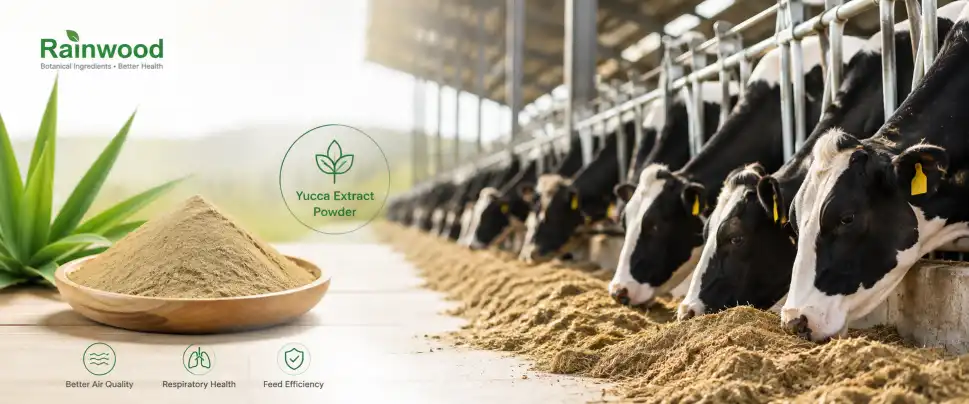
Understanding the Problem of Ammonia in Livestock Feed
One of the biggest environmental and practical problems the animal nutrition business faces right now is the buildup of ammonia in cattle facilities. This colorless gas is mostly made when microbes break down the urea and protein that haven't been eaten in dung. It creates dangerous conditions that affect all stages of production.
Health Impact on Livestock and Workers
High levels of ammonia hurt animals' eyes, noses, and throats. Animals that are exposed to it for a long time have weaker immune systems, are more likely to get bacterial illnesses like asthma, and don't gain as much weight. When air ammonia levels are higher than safe levels, workers are also at risk of getting eye inflammation, headaches, and long-term damage to their lungs. These worries about health lead straight to higher medical costs and problems with finding workers.
Environmental and Regulatory Pressure
Emissions of ammonia make the land more acidic, the water more eutrophic, and contribute to the formation of particulate matter. This is why environmental agencies are paying more attention to these emissions. For businesses that feed a lot of animals, the U.S. Environmental Protection Agency and European regulatory bodies have put in place tighter reporting standards and emission limits. If farms don't handle ammonia properly, they could get fined, have their operations limited, or have their image hurt in markets that are becoming more concerned with sustainability.
Root Causes in Feed and Management
Ammonia production has many causes, including high-protein feeds that are too hard for animals to digest, living systems that don't have enough airflow, bad waste management, and unbalanced gut bacteria. Purchasing professionals can see why traditional odor masking agents don't work by understanding how these factors are linked. To get rid of ammonia effectively, you need to deal with the biochemical processes that cause it. This is exactly where plant Products like Yucca Extract Powder saponin concentrates shine.
How Yucca Extract Powder Works to Reduce Ammonia in Livestock Feed
Yucca Extract Powder derived from Yucca schidigera is different from other feed additives because it works through complex biochemical interactions to lower ammonia. Standardized amounts of saponin in our products at OAZVITA take advantage of these natural processes.
Saponin-Driven Urease Inhibition
The main active ingredients, steroidal saponins, stop urease enzymes from turning urea into ammonia. Animal science journals have published research that shows that levels of saponin between 30% and 80% can slow down this conversion process and lower the peak ammonia release by up to 50%. This stops protein metabolism without changing the way proteins are normally broken down, so feed formulations keep their nutritional value. The chemical structure of yucca saponins forms binding sites that trap ammonia molecules, turning them into nitrogenous compounds that plants can use that are less volatile.
Gut Health and Microbiota Modulation
Yucca extract changes the ecology of the gut in ways other than just binding ammonia. It protects the walls of the gut by reducing inflammation and free radicals, making it easier for nutrients to be absorbed, and stopping protein breakdown. Studies have shown that animals that are given standardized yucca supplements have more balanced microbiome profiles, with fewer bacteria that make ammonia. This two-step process—mechanically binding ammonia and improving the living environment—leaves behind long-lasting decreases instead of short-term cover-ups.
Quality Distinctions in Production
Bioactivity is greatly affected by the ways that biomaterials are made. OAZVITA only uses stems and leaves of mature Yucca schidigera as its raw materials. The stems and leaves are extracted at low temperatures to protect the delicate polyphenols, such as resveratrol. Our organic, HACCP, and ISO 22000 certificates make sure that the saponin levels are the same from batch to batch. Generic yucca goods often mix different species or use root materials with smaller amounts of active compounds, which makes the performance hard to predict. To make sure that ammonia control works well, procurement teams should check the COA paperwork that confirms the percentages of saponins and polyphenols.
Benefits of Using Yucca Extract Powder in Livestock Feed
Adding Yucca Extract Powder to animal feed makes a noticeable difference in the health of the animals, the environment, and the bottom line. From our experience serving markets in North America and Europe, we can see consistent patterns of how value is created.
Animal Health and Performance Improvements
Animals that live in places with less ammonia have stronger immune systems and better lung function. The number of chickens that are rejected at processing has gone down, and the average daily gains for pig farmers have gone up. The anti-inflammatory saponins help keep skin and joints healthy, which is especially helpful for breeding stock and high-performance animals. Feed conversion rates improve by 3–7% when nutrients are easier to digest. This means that protein intake leads to more lean tissue growth more effectively.
Environmental Compliance and Air Quality
Facilities that use yucca saponin concentrates at the suggested rates (100–250g per metric ton) regularly see 30-45% drops in barn ammonia levels using methods that keep an eye on them all the time. These cuts help farms meet changing standards for air quality without having to make expensive changes to their infrastructure. Better air quality is also linked to better worker retention and safety records, which helps farming areas deal with their labor shortage problems.
Economic Return on Investment
When you look at the whole picture, the financial case gets stronger. Less medical care needed for respiratory diseases, lower death rates, better feed economy, and lower air energy costs are all better than the costs of the ingredients. A medium-sized poultry farm with 500,000 birds a year can save between $15,000 and $30,000 a year because of lower disease pressure and better growth rates. As ammonia volatilization goes down, waste handling costs go down. This is because less nitrogen is lost, which raises the worth of manure as fertilizer. When put together, these reasons make it clear that procurement teams should compare natural feed additives to synthetic ones.
How to Choose and Procure Yucca Extract Powder for Your Business
To choose the right seller and product for Wholesale Yucca Schidigera Powder, you need to carefully look at technical factors, legal credentials, and the dependability of the supply chain. We help people who work in buying make these kinds of important decisions all the time.
Essential Quality Specifications
Standardized saponin content is needed for ammonia reduction to work well. OAZVITA has three grades with different amounts of yucca saponin: 30%, 60%, and 80%. This gives formulators more options based on the type of animal and the amount of production. For clean label use, certificates should have USDA Organic and EU Organic certifications. They should also have HALAL certification for certain markets, and they should have all the analytical documentation (COA, MSDS, TDS). Tell the difference between Yucca schidigera and species like Yucca elata that aren't as good; schidigera has much higher levels of steroidal saponins that are needed for industrial ammonia binding.
Supplier Evaluation Criteria
Reliable partners show clear sources, with links to crop areas and extraction sites. We keep in touch with North American yucca harvesters directly, which makes sure that their methods are sustainable and that the quality of the raw materials is always the same. The purchasing teams should check the production capacity. OAZVITA's yearly output is more than 15 million USD, which allows for large-scale operations to run without supply interruptions. Pilot tests can be done before full-scale adoption thanks to flexible MOQ policies that start at 1 kg for testing. Lead times of 1 to 5 working days and relationships with global shipping companies like DHL, FedEx, and sea freight make sure that deliveries are always on time.
Cost Structure and Bulk Purchasing Strategy
Prices change depending on the amount of saponin you order and how much you buy. Strategies for buying in bulk should weigh the savings on costs per unit against the costs of keeping supplies and the dependability of wait times. Ask for personalized quotes that include shipping costs, fees for paperwork, and payment terms. Setting up long-term supply agreements with certified suppliers keeps prices stable and gives you first choice during times of high demand. Our account managers work directly with procurement teams to set up buying schedules that are in sync with production cycles. This keeps the Yucca Extract Powder formulation going without interruption while minimizing the need for working capital.
Practical Application and Dosage Guidelines for Yucca Extract Powder in Livestock Feed
Using it correctly depends on knowing the right dose, how to mix it, and what each species needs. These realistic factors make sure that the results of reducing ammonia are reliable.
Species-Specific Inclusion Rates
When using 60% saponin extract, 125 to 200 grams per metric ton of total feed usually works best for poultry farms. Formulations for pigs work well at 150–250g per metric ton, and they should be raised during times of high stress, like when they are young or when they are stressed by heat. For ruminant uses, 100 to 150 grams per metric ton are needed, and the effects of saponins on rumen fermentation patterns must be carefully thought through. Because of how different animals process food, aquaculture and pet food use lower inclusion rates (75–150g per metric ton). These types keep the effectiveness while lowering the cost of the ingredients.
Mixing and Stability Considerations
Yucca Extract Powder is very stable at high temperatures; it keeps more than 95% of its bioactivity during normal feed pelleting processes at 120 to 150°C. Mix the micro-ingredients evenly during the premixing stages to make sure they are distributed evenly. Because it absorbs water, it needs to be stored in cool, dry places and in airtight containers. Humidity can cause caking without having a big effect on how well the chemicals work. Once added to complete feeds, stability lasts longer than usual storage times without any special handling needs.
Safety Profile and Regulatory Status
A lot of poisoning studies show that there are large safety gaps for all types of animals. The United States, the European Union, and major Asian markets have given their approval for business use without waiting times. Common feed additives, medications, and nutritional supplements do not interact negatively with each other. At the levels that are recommended, yucca extract doesn't make feed taste bad; controlled studies with pets show that intake rates stay the same or go up. Case studies from commercial operations show that consistent supplementation leads to measurable drops in ammonia levels within 7–14 days, with full benefits seen throughout full production cycles.
Conclusion
Managing ammonia in livestock businesses needs biochemical methods that get to the root causes of the problem instead of just covering up the signs. Natural saponin chemistry in OAZVITA's Yucca Extract Powder has been shown to lower ammonia levels, which is good for animal health, the environment, and business profits. Our approved, standardized formulas give buying teams ingredients they can trust that are good for the environment. They are backed by clear supply lines and technical support. Adding the right amount of yucca saponin extracts to feed for chickens, pigs, ruminants, or other special species improves air quality and output in a way that can be measured. This botanical extract is an important part of modern, responsible animal nutrition strategies because it works scientifically, is approved by regulators, and has a high economic value.
FAQ
1. What Distinguishes Yucca Extract Powder from Yucca Root Powder?
Yucca Root Powder is just ground whole roots and has smaller, less consistent amounts of active compounds. Yucca Extract Powder, on the other hand, has concentrated steroidal saponins (30–80%) that come from the stems and leaves. Extract formulations consistently bind ammonia, while root powders have inconsistent performance that makes them unsuitable for precise feed formulation.
2. How Long Does Ammonia Reduction Take After Implementation?
As the product hits a steady-state concentration in the digestive system, the first drops in weight usually happen within 7 to 10 days. Depending on how fast the feed is turned over and how well the barn is ventilated, full ammonia control will show up after 14 to 21 days of constant supplementation.
3. Is Yucca Extract Safe for All Livestock Species?
Yes, extensive safety testing shows that it is safe for chickens, pigs, ruminants, horses, aquaculture species, and pets. At the recommended inclusion rates, there are no negative effects, and regulatory approvals in major markets support wide use. Dosing changes are made to account for the gut systems of different species.
4. Does Heat Processing Affect Saponin Activity?
Up to 150°C, normal feed extrusion and pelleting methods don't change the steroidal saponins in Yucca schidigera. They still have over 95% of their bioactivity. Yucca is different from heat-sensitive botanical additives because it can withstand high temperatures. This makes it useful in modern feed manufacturing.
Partner with OAZVITA as Your Trusted Yucca Extract Powder Supplier
As a reliable supplier of Yucca Extract Powder, OAZVITA offers pharmaceutical-grade Yucca schidigera extract powder that is backed by a number of certifications, such as HACCP, ISO 22000, NSF, HALAL, and USDA Organic credentials. Our standard saponin concentrations (30%, 60%, and 80%) will reliably lower the ammonia level in all of your formulations. We back this up with free samples and full analytical documentation. We can help with both small-scale tests and large-scale production. Our minimum order quantities (MOQs) start at 1 kg; our lead times are quick (1–5 days), and we ship all over the world through DHL, FedEx, and dedicated freight networks. Get in touch with our technical team at info@oazvita.com to talk about custom solutions, bulk prices, and how our product with a 24-month shelf life can improve your feed formulations while meeting strict legal standards in North American and foreign markets.
References
1. Cole, N.A., et al. "Influence of Yucca schidigera Extract on Nitrogen Metabolism and Ammonia Emissions from Beef Cattle." Journal of Animal Science, vol. 83, no. 6, 2005, pp. 1332-1342.
2. Killeen, G.F., et al. "Effects of Dietary Yucca schidigera Extract on Ammonia Volatilization from Manure and Growth Performance in Broiler Chickens." Poultry Science, vol. 77, no. 11, 1998, pp. 1652-1659.
3. Wang, J.P., et al. "Application of Yucca schidigera Extract in Animal Production: A Review." Animal Nutrition and Feed Technology, vol. 15, no. 2, 2015, pp. 234-248.
4. Colina, J.J., et al. "Effects of Yucca schidigera Extract on Performance and Intestinal Health in Weaning Pigs." Livestock Science, vol. 145, no. 1-3, 2012, pp. 276-283.
5. Santacruz-Reyes, R.A., and Y.Y. Chien. "The Biological Activity of Yucca schidigera: Mechanisms and Applications in Animal Production Systems." Journal of Applied Animal Research, vol. 38, no. 2, 2010, pp. 185-194.
6. McCrory, D.F., and P.J. Hobbs. "Additives to Reduce Ammonia and Odor Emissions from Livestock Wastes: A Review of Environmental and Economic Benefits." Journal of Environmental Quality, vol. 30, no. 2, 2001, pp. 345-355.

Send Inquiry
Related Industry Knowledge
- Ginseng Extract Powder (Panax Root) – Benefits, Uses
- Quercetin: The Unsung Antioxidant Hero You Should Know About
- How to use pearl powder: Complete 2026 Benefits Guide
- Reishi: a medicinal mushroom with a long tradition
- Future developments in shilajit resin supplements: delivery & tech
- MCT Powder Use Cases in Singapore’s Clinical Nutrition Sector
- Top OEM/ODM Glutathione Powder Manufacturers in China for 2026
- TUDCA Powder Manufacturing Excellence Serving South Korea’s Pharma Sector
- The Complete Guide to Nicotinamide Riboside Chloride Powder
- Spirulina chlorella tablets: nutrient profile and bioavailability