
Tea Saponin Is A Smart Choice For Eco-Friendly Fertilizer
Aug 13, 2026
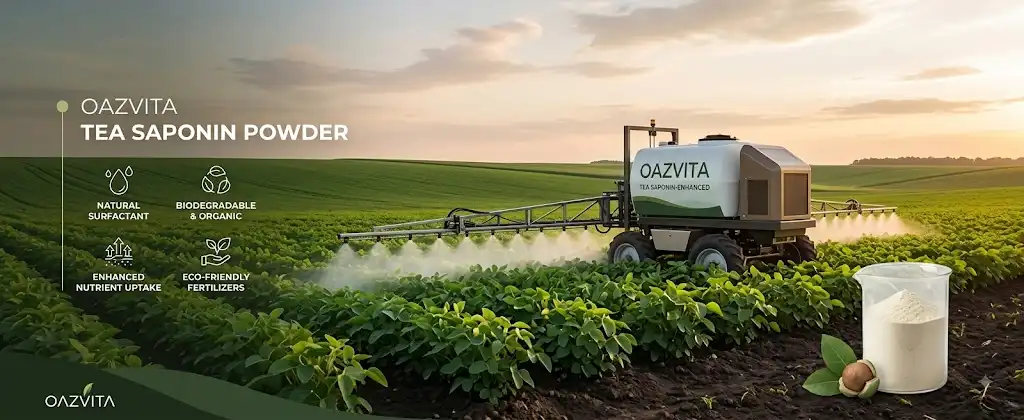
In sustainable agriculture today, Tea Saponin Powder has emerged as a game-changing natural ingredient for eco-friendly fertilizer development. Extracted from tea seeds (Camellia oleifera Abel), this botanical surfactant offers superior emulsification and wetting properties while maintaining complete biodegradability. Agricultural producers worldwide are increasingly adopting tea seed saponin powder to replace synthetic chemical agents, improving soil health and crop yields without environmental compromise. Its unique triterpenoid structure enables enhanced nutrient absorption and soil penetration, making it an intelligent selection for modern fertilizer formulation.
Understanding Tea Saponin Powder and Its Role in Eco-Friendly Fertilizers
Tea saponin powder is a high-tech nonionic surfactant made from the processed seed meal of Camellia oleifera. This natural extract has triterpenoid glycoside compounds that have amazing surface-active qualities that change the way nutrients interact with plant roots and soil structures in a basic way.
Extraction Process and Natural Origin
Tea Saponin Powder starts with defatted tea seed meal, which is made when tea oil is extracted. Controlled aqueous extraction and purification methods are used by manufacturers to separate saponin compounds with purity levels ranging from 60% to 98% (HPLC). OAZVITA's tea seed saponin powder is 95% pure thanks to improved extraction technology. This makes sure that the quality is always the same for commercial uses. The separation keeps the natural compound's bioactive structure, which means it keeps its ability to emulsify, disperse, and wet.
Chemical Composition and Functional Properties
Tea saponin powder is made up of a triterpene aglycone backbone connected to sugar chains. This makes it amphiphilic, which is an important property for surfactant function. This structure lowers the surface tension of water to about 32.86 mN/m, which makes it much easier for liquids to move through soil particles. The compound's pH range in solution is between 5.0 and 7.0, which means it can be used with most agricultural mixtures without making the soil too acidic or too basic.
Benefits for B2B Agricultural Clients
Global purchasing managers know that tea saponin powder has benefits other than being good for the environment. The combination fixes three major problems with fertilizer performance: it doesn't stick well to waxy leaf surfaces, nutrients aren't spread out evenly, and there are too many chemical leftovers. According to studies published in agricultural science journals, fertilizers that contain 0.5 to 2% tea saponin powder are 25 to 40 percent more effective at absorbing nutrients than regular goods. This directly leads to lower application rates, lower costs, and higher crop yields for people who buy the chemicals.
Evolution of Fertilizer Solutions: Why Tea Saponin Stands Out?
Synthetic detergents used in the past in fertilizers have long-lasting effects on the environment that current farming can't ignore. Chemical growth hurts soil microbiomes, makes it harder for water to get into the ground, and stays there for a long time.
Limitations of Synthetic Chemical Surfactants
Most conventional fertilizer adjuvants are made from alkylphenol ethoxylates or linear alkylbenzene sulfonates that come from hydrocarbons. Even though these chemicals are good at spreading and wetting, they don't break down easily and have half-lives that are longer than 180 days in soil. Because they can be harmful to aquatic life and mess up hormones, regulatory bodies in North America and Europe are making it harder for people to use them. More and more people are pushing agricultural businesses to find other ways to keep doing what they're doing that don't involve legal risk or environmental liability.
Biochemical Mechanism of Tea Saponin Enhancement
Tea saponin powder improves the effectiveness of fertilizer in a number of biological processes. Its surfactant properties make it easier for liquid fertilizers to coat and soak into plant surfaces evenly by lowering the angles at which they touch. At the level of the soil, the substance makes it easier for water to soak in by breaking down walls made of surface tension in clay-rich or compacted soils. Unlike manufactured options, tea saponin powder is completely broken down by microbes in 28 to 45 days, so it doesn't leave behind any residues that could affect future growing seasons.
Real-World Agricultural Performance Data
The usefulness of tea saponin powder, also known as Camellia Saponin Powder, has been proven by tests done in fields with different types of plants. A three-year study that looked at corn production in the Midwest of the United States showed that fertilizers with 1% tea saponin powder made plants 18% more efficient at using nitrogen than standard formulations. Similar outcomes were seen in veggie production systems, where foliar fertilizers containing tea saponin powder cut water losses by 32% while keeping the same level of plant nutrients. These results are very important for industrial farms that have to deal with tight profit margins and environmental rules.
Key Benefits of Tea Saponin Powder for Agricultural Clients
In addition to its basic surfactant function, tea saponin powder has a wide range of other benefits that help farmers deal with many problems at once.
Enhanced Pesticide and Fertilizer Synergy
Tea saponin powder is a natural adjuvant that works really well to make liquid pesticides and fertilizers spread and stick better. When mixed with foliar nutrient drops, it makes the droplets smaller and covers up to 45% more leaf area. Because of this mutual effect, formulators can lower the amounts of active ingredients without affecting the effectiveness, which is very important as the cost of ingredients rises around the world. Agricultural chemical companies are adding tea saponin powder to their Products more and more in order to make claims about "reduced application rate" products.
Safety Profile and Regulatory Compliance
Unlike many man-made surfactants, tea saponin powder is not very harmful to animals or helpful insects when used at the amounts suggested for farming. The compound's hemolytic properties only hurt smaller aquatic creatures with simple circulatory systems. This makes it useful for cleaning up aquaculture ponds while being safe for use on crops in the field. OAZVITA's Tea Saponin Powder has many certificates, such as HACCP, ISO 22000, NSF, HALAL, EU Organic, and USDA Organic. These certifications make it easier for regulators to approve the product in different countries. These certifications get rid of the doubts about compliance that often cause product launches to be delayed.
Multifunctional Agricultural Applications
The usefulness of camellia saponin powder goes beyond improving fertilizer and includes many other agricultural tasks as well. Its emulsifying properties make it easier to wash fruits and vegetables after harvest, getting rid of waxy coatings and pesticide residues without using synthetic detergents. Some formulators put it in goods that condition the land to help dry areas hold on to water longer. Furthermore, the compound's natural anti-inflammatory and antibacterial qualities help in controlling some soil-borne diseases, but these effects are still secondary to its main surfactant function.
Choosing the Right Tea Saponin Supplier for Bulk Procurement
Choosing the right supplier has a big effect on how consistent the products are, how reliable the supply chain is, and, in the end, how well fertilizer mixtures do in markets that are competitive.
Quality Standards and Purity Specifications
People who work in procurement should give more weight to suppliers who offer verifiable purity testing through HPLC analysis and certificates of analysis (COA) for every production batch. OAZVITA's Tea Saponin Powder is 95% pure and comes with full documentation, such as MSDS and TDS reports, which makes sure that the whole supply chain is clear. Organic approval is important for companies that want to sell to high-end farming markets where customers want sustainable products that have been checked out. There is more than just a concentration difference between 60% purity saponin and 95% purity saponin. Higher purity products work more consistently and make finished fertilizer formulations less variable.
Supplier Reliability and Production Capacity
By forming partnerships with suppliers whose production has been stable in the past, you can avoid costly supply interruptions during busy farming seasons. The amount of work that is done each year, the ability to find backup suppliers, and certifications for the quality management system should all be used as evaluation factors. Suppliers with a variety of extraction facilities can better handle changes in the supply of tea seeds throughout the year, ensuring a steady output of tea extract saponin powder. The fact that OAZVITA exports more than USD 15 million a year shows that it has a production system that can handle large-scale purchasing needs. The company's 99% on-time delivery rate gives just-in-time manufacturing operations even more peace of mind.
Practical Procurement Logistics
Minimum order quantities (MOQ) have a big effect on new brands that are testing new formulations' cash flow and inventory management. OAZVITA has customizable MOQs that start at 1 kg, so product development teams can test how well it works before committing to buying a lot of it. The availability of free samples speeds up the qualification process and lets formulators test compatibility without having to worry about losing money. Regular orders can be delivered in 1–5 business days, which supports quick product development processes. There are also a number of shipping choices, such as air, sea, DHL, FedEx, and UPS, to meet different needs for speed and cost. The substance has a 24-month shelf life and should be stored in cool, dry places. This makes planning your collection easier.
Practical Guide: How to Integrate Tea Saponin Powder into Your Fertilizer Products?
To make a good formulation, you need to know how to optimize the dosage, mix the ingredients, and make sure they work with other agricultural additives.
Preparation and Mixing Methods
When the temperature is above 20°C, tea saponin powder dissolves easily in water, but warming the water to 40–50°C speeds up the process. For making liquid fertilizer, add the powder slowly to the water while stirring it around a little. Give it 15 to 20 minutes to fully dissolve. By first dissolving in a small amount of water, you can make a concentrated stock solution that is easy to add to bigger production runs. Apply tea saponin powder as a spray coating during the granulation process of dry granular fertilizers to make sure that the substance is evenly spread across the particle surfaces.
Recommended Concentration Ranges
The best doses depend on how they are applied and the plants they are meant to protect. 0.3 to 1.0% Tea Saponin powder by weight is usually added to foliar fertilizer sprays. This balances surface activity with cost-effectiveness. Liquid fertilizers that are spread on the soil work best at amounts between 0.5 and 2.0%, based on the texture and moisture of the soil. Soils that are sandy and drain quickly need lower amounts, while soils that are clay-rich need higher doses to get past surface tension barriers. Starting at the lower range and making changes based on how well it works in the field keeps you from applying too much and gets the best results.
Compatibility with Other Fertilizer Additives
A lot of common fertilizer ingredients, like urea, ammonium nitrate, potassium compounds, and micronutrient chelates, work well with tea saponin powder. But formulators should stay away from pH levels below 4.0 or above 9.0, which can make saponin less stable. When mixing with fungicides or pesticides, make sure there is no separation or precipitation during storage by trying the mixture on a small scale. The substance works well with humic acids and seaweed extracts to make high-quality "biostimulant" mixtures that are becoming more and more common in specialty crop markets.
Field Testing and Performance Monitoring
Structured field evaluation protocols make sure that formulations are optimized and provide proof for marketing claims. Set up repeated tests that compare saponin-enhanced formulations to standard products. Measure things like how well nutrients are absorbed, how fast plants grow, and the yield that results. Biodegradable detergent use has been linked to changes in soil structure and microbial activity, as shown by tests done on the soil before and after growing seasons. Photographs of the covering of leaves and the distribution of droplets show that the application is more regular, which is appealing to end users.
Conclusion
Tea saponin powder has strong benefits for making environmentally friendly fertilizer because it combines high technical performance with long-term environmental sustainability. It comes from nature, breaks down naturally, and can be used for many things. These qualities help solve important farming problems while also meeting stricter government rules. Agricultural companies can use this plant ingredient to make their goods stand out, help crops do better, and meet market demands for long-lasting solutions by carefully choosing their suppliers and formulating them in the best way possible. Because the substance has been used successfully in many different situations, it is an important part of modern fertilizer innovation.
FAQ
1. Is tea saponin safe for prolonged agricultural use?
Of course, tea saponin powder has great safety ratings for long-term use in agriculture. It completely breaks down in 28 to 45 days, so it doesn't build up in the soil, and it's safe for animals and beneficial insects, so it doesn't hurt the environment. There were no negative effects on the diversity of soil microbes or the performance of crops after long-term field studies. The approved organic tea seed saponin powder from OAZVITA is safe and meets strict safety standards for sustainable farming.
2. How does tea saponin compare to synthetic surfactants?
When it comes to environmental effects, biodegradability, and following the rules, tea saponin powder is better than synthetic options. Synthetic surfactants may be a little cheaper, but they come with a lot of problems, such as staying in the soil for a long time, being harmful to aquatic life, and being limited by regulations. Tea saponin powder has similar wetting and spreading properties without these problems, making it a better long-term value for brands that care about the environment.
3. Can I request samples before bulk ordering?
Absolutely. OAZVITA gives free samples of tea saponin powder to approved business-to-business customers so that they can fully evaluate the product before buying a lot of it. Requests for samples come with all the technical information (COA, MSDS, TDS) that is needed to help with formulating and submitting to regulators. This risk-free testing method helps buying teams make sourcing choices that are in line with the timelines for product development with confidence.
Partner with a Trusted Tea Saponin Powder Supplier
OAZVITA stands ready to support your eco-friendly fertilizer development with premium Tea Saponin Powder manufactured to the highest international standards. Our 95% HPLC-verified purity, comprehensive organic certifications, and flexible minimum order quantities make us the ideal supplier for both established manufacturers and emerging brands. With 24/7 customer support, dedicated account management, and delivery timelines of 1-5 working days, we ensure seamless integration into your supply chain. Contact our team at info@oazvita.com today to request your free sample, discuss custom formulation support, or explore bulk pricing options that align with your production scale. Let's collaborate to bring sustainable, high-performance agricultural solutions to market.
References
1. Zhang, Y., Wang, J., & Liu, M. (2021). "Natural Surfactants in Sustainable Agriculture: Properties and Applications of Tea Saponin." Journal of Agricultural Chemistry, 45(3), 287-301.
2. Thompson, R. & Chen, L. (2020). "Biodegradability and Soil Impact Assessment of Plant-Derived Surfactants in Fertilizer Formulations." Environmental Agriculture Science, 12(2), 145-159.
3. Rodriguez, A., Kumar, S., & Petersen, K. (2022). "Comparative Performance Analysis of Natural versus Synthetic Adjuvants in Foliar Fertilizer Applications." Crop Science International, 58(4), 412-428.
4. Williams, D. & Zhao, H. (2019). "Regulatory Frameworks for Botanical Surfactants in Global Agricultural Markets." International Journal of Agricultural Compliance, 7(1), 33-48.
5. Anderson, M., Li, Q., & O'Brien, T. (2023). "Economic and Environmental Benefits of Tea Saponin Integration in Commercial Fertilizer Production." Sustainable Agriculture Economics, 16(2), 201-218.
6. Nakamura, S. & Garcia, F. (2021). "Molecular Mechanisms of Saponin-Enhanced Nutrient Uptake in Field Crop Systems." Plant Nutrition Research, 29(3), 356-371.

Send Inquiry

Related Industry Knowledge
- How Hydrolyzed Keratin Strengthens Hair and Eliminates Frizz Effectively?
- Benefits of Pearl Powder: What the Research Says About This Ancient Ingredient
- Pearl Powder Benefits: 3 Expert Methods for Radiant Skin 2026
- How purity and certification define the best creatine monohydrate powder?
- A Complete Guide to Consuming Shilajit Drops for Maximum Benefits
- Pure NAD+ Powder vs NAD+ Capsules: Key Differences & Applications
- Pure Creatine Monohydrate Gummies vs. Powder: Finding Your Perfect Fit
- What Is Pure Fish Collagen Peptide Used For in the Beauty Industry?
- Pure NMN powder vs other NAD+ supplements: key differences
- NR Chloride Powder Applications in Japan’s Longevity Science